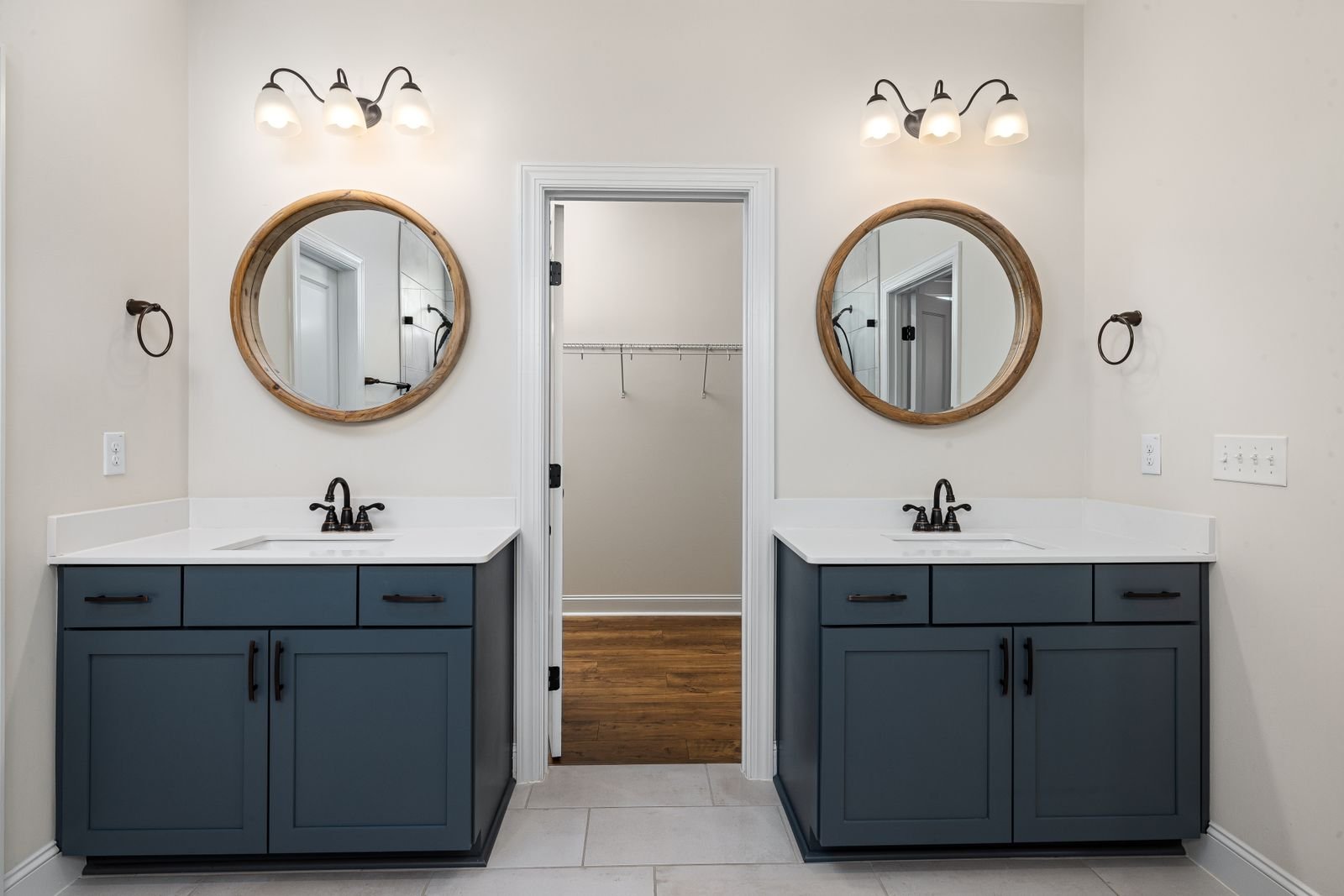
Bathroom Vanity Installation in Raleigh, NC
A new cabinet, countertop, sink and faucet, connected, leveled and sealed. Tell us about your bathroom and we connect you with a local Raleigh contractor who will contact you for a free estimate.
No cost and no obligation. Tell us about your project and a local contractor will reach out to talk it through.
What bathroom vanity installation involves
The old vanity, top and sink come out. The new cabinet is set level and secured to the wall, the countertop and sink go on, and the faucet, supply lines and drain are connected and sealed. Most installers replace the shutoff valves while they're at it, because old ones often won't fully close.
What's behind and under the old vanity is what decides how simple the job is. In many homes the flooring stops at the edge of the old cabinet, and the wall behind it was never painted. A new vanity with a different footprint can leave a gap in the floor or expose bare drywall. Matching the old footprint, or planning the floor and paint into the job, avoids that surprise.
Going from a single sink to a double, or moving the sink, means extending the supply and drain lines inside the wall. That's a plumbing change, not just a cabinet swap.
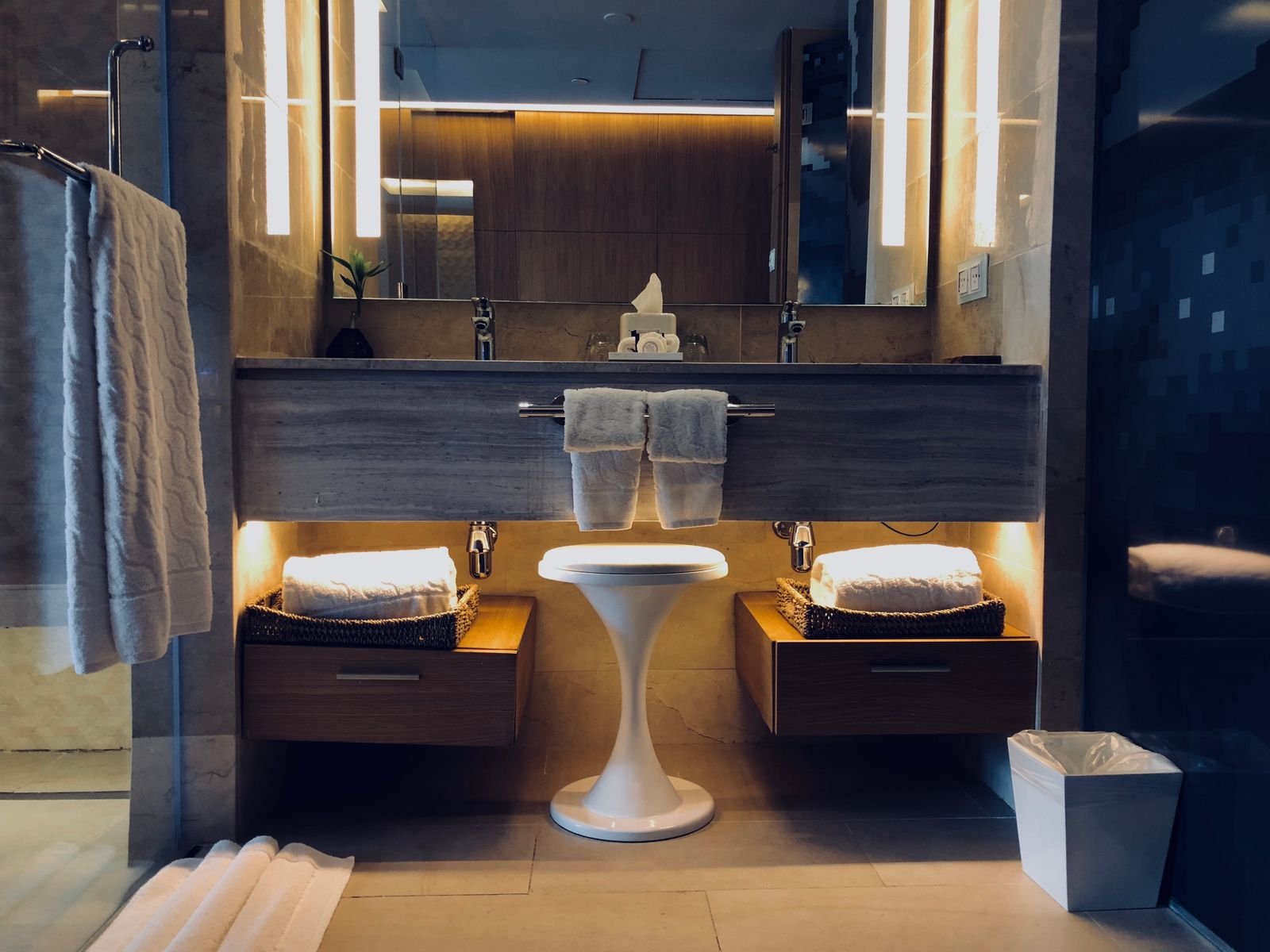
The parts of the job
Cabinet
Freestanding, wall-hung or built-in, in standard widths from about 24 to 72 inches. Comfort-height cabinets around 34 to 36 inches are popular in primary baths.
Countertop and sink
Quartz, granite, marble or cultured marble with an undermount, vessel or integrated sink. The top is usually templated after the cabinet is set.
Faucet and connections
Single-hole, centerset or widespread faucet, new supply lines, a new drain assembly and new shutoff valves.
Why a new vanity is worth it
It's the most-used surface in the bathroom, and the quickest way to change how the room looks.
A better cabinet solves storage problems a bigger room can't.
A second sink can make a shared primary bath much easier to use in the morning.
What you get
- More storage with drawers instead of a single cabinet
- A durable top that resists stains
- New faucet, valves and drain to stop slow leaks
- Optional second sink where the space allows
How a bathroom vanity installation project usually runs
Measure the space
Width, depth, door swing and where the existing supply and drain sit.
Choose cabinet and top
Size, height and materials; the top may be templated later.
Remove the old vanity
Water shut off, old unit removed, wall and floor checked.
Set and level
Cabinet shimmed, leveled and secured to studs.
Top, sink and faucet
Countertop installed, sink and faucet mounted, plumbing connected and leak-tested.
Backsplash and finish
Backsplash, caulk, mirror and lighting if they're part of the job.
What to think about first
- Check whether your flooring runs under the old vanity before you pick a different size.
- Leave room for drawers and doors to open past the toilet and the bathroom door.
- Plan the mirror and lighting at the same time. A wider vanity often needs a new light or a second fixture.
- Adding a sink or moving the drain is a change in plumbing design, which in North Carolina usually needs a permit. Confirm with the City of Raleigh.
Bathroom Vanity Installation questions
How long does vanity installation take?
A like-for-like swap is often a one-day job. A stone top that has to be templated and fabricated after the cabinet is set can add a week or more between visits.
Can I switch from a single sink to a double sink?
Usually, if the wall is long enough, typically 60 inches or more. The supply and drain lines have to be extended, so it's more involved than a straight swap.
What vanity height should I choose?
Older vanities are often around 30 to 32 inches. Many people now prefer comfort height, around 34 to 36 inches, in a primary bath. A lower height can still suit a kids' bath.
Will the new vanity fit my existing plumbing?
Most do, but wall-hung and some open-shelf designs leave plumbing visible or need the drain at a specific height. Check before ordering.
What about the mirror and lights?
Many vanity jobs include a new mirror or medicine cabinet and a light fixture. A like-kind light fixture swap is generally exempt from permits in North Carolina when done by a licensed electrician, but new circuits are not.
Are you the installer?
No. We're a referral service. We pass your project to an independent local contractor who contacts you about it.
Other projects in Raleigh
Bathroom Vanity Installation near Raleigh
Ready to talk about bathroom vanity installation?
Tell us what you want to change. We pass your project to a local bathroom contractor who contacts you to set up an estimate.
We are a referral service, not a contractor. Submitting a request is free and does not commit you to anything.